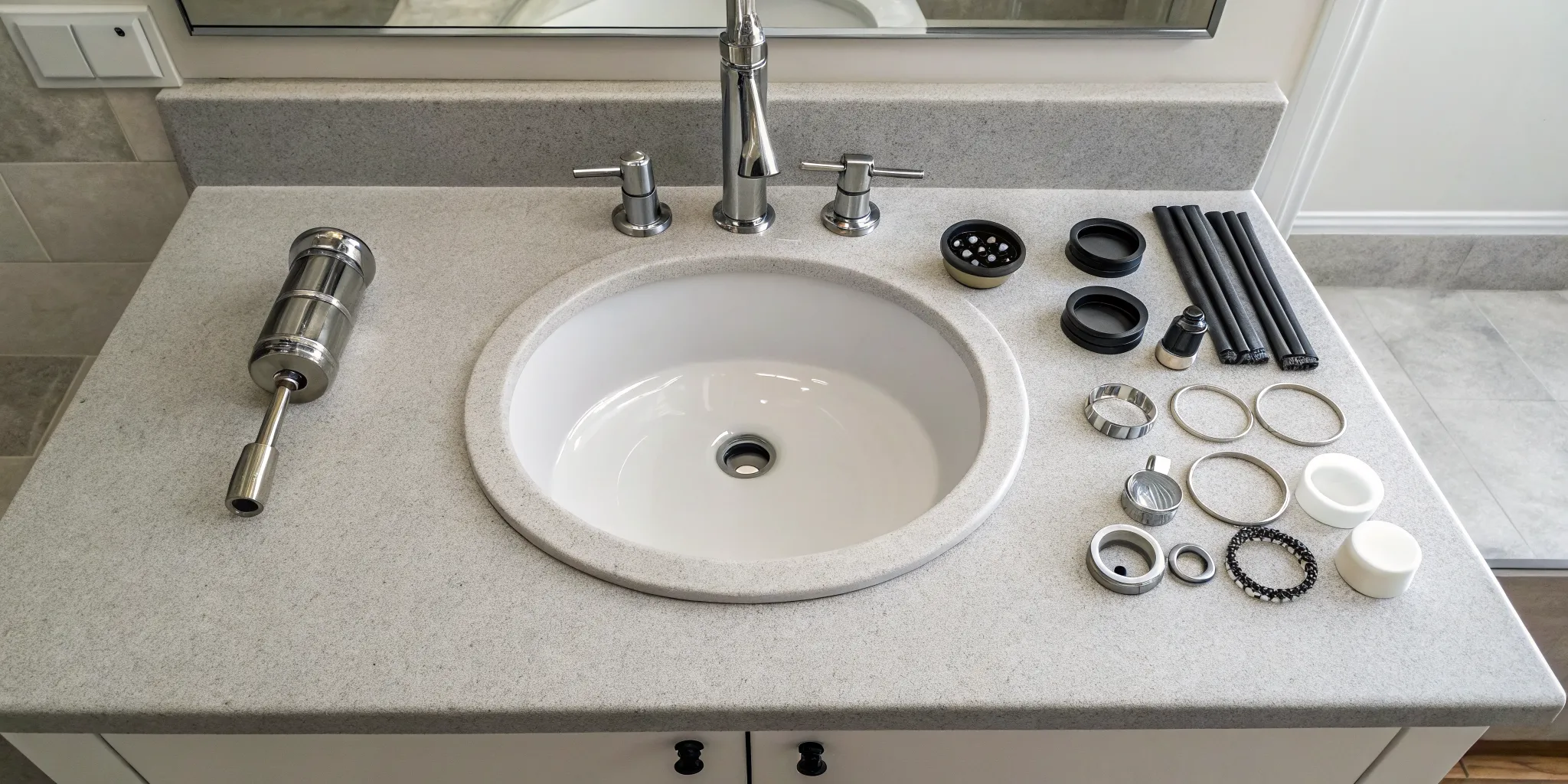
That constant drip, drip, drip from the sink is more than just an annoying sound; it’s a steady trickle of wasted water and money going right down the drain. While your first instinct might be to call for backup, many common faucet leaks can be fixed with a simple, inexpensive solution. This is where the right bathroom faucet repair kit comes in. Think of it as a first-aid kit for your plumbing, containing all the small but essential parts needed to stop a leak in its tracks. This guide will walk you through everything you need to know, from identifying your faucet type to choosing the perfect kit and installing it with confidence.
Key Takeaways
- Identify your faucet before you shop: Knowing your faucet’s brand and whether it has one or two handles is the most important step to ensure you buy a repair kit with parts that fit correctly.
- Prioritize quality materials for a lasting fix: A slightly more expensive kit with durable components like brass and high-grade rubber will save you from having to repeat the repair in a few months.
- Recognize when a DIY fix isn’t enough: If the leak persists after your repair or you spot bigger issues like water stains or a drop in pressure, it’s time to call a professional to prevent more serious damage.
What’s in a Bathroom Faucet Repair Kit?
Before you can tackle a leaky faucet, you need the right tools for the job. A faucet repair kit is your go-to solution for fixing most common drips and leaks without replacing the entire fixture. Think of it as a first-aid kit for your faucet, containing all the small but essential parts that wear out over time. Knowing what’s inside and what problems it can solve will help you decide if a DIY fix is right for you or if it’s time to call in a pro.
Key Components
When you open a standard bathroom faucet repair kit, you’ll find a collection of small parts designed to restore your faucet’s function. Most kits include the basics like O-rings, seals, springs, and washers, which are the most common culprits behind annoying drips. Depending on the type of faucet you have, the kit might also contain a new cartridge or stem, the internal components that control water flow. You can find a wide variety of faucet parts at local hardware stores, with some companies even offering specialized kits for specific sink, shower, or tub fixtures.
Signs Your Faucet Needs a Fix
Not sure if a repair kit is what you need? Your faucet will usually give you a few clear signals. The most obvious sign is a constant drip from the spout or a leak around the handle. This often means an internal part, like a seal or cartridge, has worn out. A simple kit usually has everything you need to solve this common problem. Another red flag is a leak near the base of the faucet or where the water supply line connects under the sink. This could point to a more serious issue than a simple kit can handle. If you’re dealing with more than a simple drip, it might be time for a professional fixture repair.
Exploring Different Types of Faucet Repair Kits
Once you’ve decided to tackle that leaky faucet, the next step is finding the right repair kit. It might seem like a small detail, but picking the correct one is crucial for a successful fix. Faucet repair kits aren’t one-size-fits-all, so let’s break down the different types you’ll find at the hardware store or online. Understanding these options will help you walk in with confidence and walk out with exactly what you need to get the job done right the first time.
Universal vs. Brand-Specific Kits
Think of universal kits as a variety pack for your faucet. They contain an assortment of common parts like washers, O-rings, and gaskets in various sizes, designed to fit a wide range of faucet models. This can be a lifesaver if you’re unsure of your faucet’s brand or model number. On the other hand, brand-specific kits are tailored for a particular manufacturer, such as Delta, Moen, or Kohler. These kits provide parts that are an exact match for your faucet’s internal components, which often leads to a more reliable and longer-lasting fixture repair. If you can identify your faucet’s brand, a specific kit is almost always the better choice.
Kits for Single-Handle vs. Double-Handle Faucets
The number of handles on your faucet is another key factor in choosing a repair kit. A single-handle faucet, where one lever controls both hot and cold water, has different internal mechanics than a double-handle faucet with separate knobs. Because of this, you’ll need a kit specifically designed for your faucet’s configuration. You can find kits for single-control, two-handle, and even three-handle setups, which are common for bathtubs. Grabbing the wrong type of kit will leave you with parts that simply don’t fit, so be sure to confirm your faucet style before you buy. This simple step will save you a lot of frustration.
Complete vs. Partial Repair Kits
Repair kits also vary in how comprehensive they are. A complete, or “all-in-one,” kit is designed for a full faucet overhaul. It typically includes everything you might need for the job, from cartridges and stems to every last washer and O-ring. This is a great option if you’re not entirely sure what’s causing the drip, as it ensures you have all potential replacement parts on hand. Alternatively, if you’ve already diagnosed the problem and know you just need a new gasket, you can often buy parts individually. While this works for simple fixes, a complete kit is often more convenient and cost-effective for a thorough repair.
How to Choose the Right Repair Kit
Walking into the plumbing aisle can feel overwhelming with so many repair kits on the shelves. How do you know which one is right for your leaky faucet? Choosing the correct kit is the most important step for a successful DIY fix. It saves you from making multiple trips to the store and ensures your repair actually lasts. Getting it right comes down to three simple things: knowing your faucet, taking a few key measurements, and understanding exactly what part is causing the problem. Let’s walk through how to tackle each one so you can buy your kit with confidence.
Identify Your Faucet Type and Brand
Before you can grab a repair kit, you need to play detective and figure out your faucet’s make and model. Faucets from brands like Delta, American Standard, or Price Pfister often require specific parts, so a generic kit might not work. Look for a brand name or logo on the faucet body, usually near the base or on the handles. If you can’t find it, check under the sink for a tag on the water lines or dig up the original manual if you still have it. Knowing the brand and model is your best bet for finding a kit that’s a perfect match for your fixture repair project, taking the guesswork out of the equation.
Measure for a Perfect Fit
Once you know the brand, it’s time to break out the tape measure. Not all faucets fit every sink, even if they’re from the same manufacturer. The most important measurement is the number of holes in your sink and the distance between them. Is it a single-hole faucet or a three-hole setup? For three-hole sinks, measure the distance from the center of the far-left hole to the center of the far-right hole. This is called the “spread” and is crucial for compatibility. Taking a few moments to double-check these details ensures the kit you buy will align perfectly with your existing plumbing appliances and fixtures, preventing a frustrating installation.
Match the Kit to Your Specific Problem
Faucet repair kits aren’t a one-size-fits-all solution for every problem. They are designed to fix specific issues. Is your faucet dripping from the spout, or is there a puddle forming at the base? A constant drip often points to a worn-out cartridge or stem, while a leak at the base might mean you need new O-rings. Read the packaging carefully to see what parts are included and what problems the kit is designed to solve. Matching the kit to your specific issue is the key to a successful repair and stopping that annoying drip for good. If you’re not sure where the water is coming from, our leak detection experts can help pinpoint the source.
What to Look for in a Quality Repair Kit
Once you’ve identified your faucet type and the problem you’re trying to solve, it’s time to pick out a repair kit. Walking down the plumbing aisle can be overwhelming, with rows of similar-looking packages. But not all kits are created equal. Choosing a quality kit is the difference between a lasting repair and a frustrating Saturday afternoon that ends with another leak. A good kit will not only have the right parts but will also be made from materials that stand the test of time. Taking a few extra minutes to check for quality, durability, and compatibility will save you a lot of headaches and ensure your faucet works smoothly for years to come.
Must-Have Features
A great repair kit should feel like a complete solution in a small package. Look for kits that include all the necessary components for your specific repair, such as O-rings, seals, gaskets, springs, and any specialized washers. Some even come with a small packet of plumber’s grease or a tiny tool to help with the installation. The goal is to avoid a second trip to the hardware store because a crucial piece was missing. A comprehensive kit shows that the manufacturer has thought through the entire repair process. If you find the job is more complex than you thought, remember you can always call on us for professional fixture repair.
Durable Materials
The quality of the materials in your repair kit directly impacts how long your fix will last. It’s tempting to grab the cheapest option, but kits with flimsy plastic parts are likely to fail quickly, putting you right back where you started. Instead, look for components made from durable materials like brass and high-grade rubber or silicone. Customer satisfaction is often tied to the quality of the materials, as better parts lead to a more reliable, leak-free faucet. Investing a few extra dollars in a kit with sturdy components is a smart move that ensures a more permanent solution and protects your home from water damage.
Faucet Compatibility
This might be the most important factor of all. A repair kit is useless if it doesn’t fit your faucet. Before you buy anything, double-check that the kit is compatible with your faucet’s brand and model. Not every part fits every faucet, so you need to be sure. Look for the brand name on the faucet body or handle, and if you can find a model number (often on the underside of the spout or on the water lines), even better. The kit’s packaging should clearly list the brands and models it works with. Taking the time to confirm compatibility will prevent the frustration of getting home and realizing you have the wrong parts.
Common Mistakes to Avoid When Buying a Kit
Choosing a faucet repair kit can feel like a simple task, but a small mistake here can lead to a lot of frustration later. Picking the wrong one can mean extra trips to the hardware store, a leak that’s worse than when you started, or a faucet that just doesn’t work right. It’s a project that seems straightforward, but the details really matter. From brand compatibility to the quality of the materials, getting it wrong can turn a quick fix into a weekend-long headache.
To help you get your DIY repair done right the first time, let’s walk through a few common pitfalls people run into when selecting a kit. We’ve seen it all over the years, and a little bit of preparation can make a huge difference. By avoiding these simple errors, you can approach your project with confidence and ensure your faucet is back in working order without any unnecessary stress. It’s all about being prepared and knowing what to look for before you even open the packaging. We’ll cover why brand matters, why the cheapest option isn’t always the best, and how to make sure you have every part you need before you start.
Forgetting Brand Compatibility
It’s easy to assume that all faucet parts are created equal, but that’s rarely the case. Not every part fits every faucet. Before you buy a kit, you need to know the brand and model of your faucet. Look for a logo or name on the faucet body, handle, or base. If you can’t find it, try looking for a model number on a tag attached to the water supply lines under the sink. Using a kit designed specifically for your brand ensures all the components, from O-rings to cartridges, will fit perfectly. While universal kits exist, they can be a bit of a gamble. A perfect fit prevents leaks and ensures your faucet operates smoothly. If you’re struggling to identify your faucet or find the right parts, our team is always ready to help with professional fixture repair.
Choosing Based on Price Alone
We all love a good bargain, but when it comes to plumbing, choosing a repair kit based solely on its low price can backfire. The cheapest option on the shelf is often made with lower-quality materials, like flimsy plastic instead of durable brass or stainless steel. These parts can wear out quickly, forcing you to do the same repair all over again in just a few months. Think of it as an investment in your home’s plumbing. Spending a little more on a quality kit from a reputable brand often means you’re getting parts that will last for years. This saves you money and time in the long run. A failed DIY repair can lead to bigger problems, so starting with reliable materials is key to a successful fix.
Not Checking if the Kit is Complete
Imagine getting halfway through your repair only to realize you’re missing a crucial O-ring or seal. It’s a frustrating scenario that happens more often than you’d think. Before you leave the store, take a moment to read the packaging and confirm the kit contains all the necessary components for your specific repair. A complete kit should include everything you need, so you don’t have to reuse old, worn-out parts. Reusing old seals is a common cause of post-repair leaks. Cross-reference the contents list with a diagram of your faucet if possible. Ensuring you have everything on hand before you turn off the water will make the entire process much smoother. If the job turns out to be more complex than you anticipated, don’t hesitate to call for professional help.
How to Install Your Faucet Repair Kit
Okay, you’ve got your repair kit and you’re ready to tackle that drip. Installing it yourself is a great way to save some money and feel accomplished. With the right tools and a bit of focus, you can get your faucet running smoothly again. Let’s walk through the process together, step by step.
Tools and Prep Work
First things first, let’s gather your supplies. You’ll probably need an Allen wrench, a Phillips or flathead screwdriver, and an adjustable wrench. It’s also smart to have a few old rags and a small bucket nearby to catch any stray water. Before you begin, clear everything out from under your sink to give yourself plenty of room to work. Most leaks from the handle or spout are caused by a worn-out part called the cartridge, which is the main component you’ll be replacing. The most important prep step is making sure you have the correct kit for your specific faucet model to guarantee a perfect fit.
A Step-by-Step Installation Guide
Ready to get started? Here’s how to install your new kit.
- Turn Off the Water: Find the two water supply knobs under your sink (one for hot, one for cold). Turn them clockwise all the way to shut off the water. Next, turn the faucet handle on to let any remaining water drain out.
- Remove the Handle: Look for a small set screw holding the handle in place. It might be on the back or hidden under a decorative cap. Use your Allen wrench or screwdriver to loosen it, then lift the handle straight off.
- Replace the Cartridge: With the handle gone, you’ll see the old cartridge. You might need to remove a retaining nut or clip first. Gently pull the old cartridge out and drop the new one into place, making sure it lines up correctly.
- Reassemble: Secure the new cartridge, then put the handle back on and tighten the set screw. If you hit a snag, our team is always ready to help with professional fixture repair.
Testing and Troubleshooting Your Repair
Once everything is back together, it’s time for the moment of truth. Make sure the faucet handle is in the “off” position. Go under the sink and slowly turn the water supply knobs counter-clockwise to turn the water back on. Check carefully for any drips around the base of the faucet and under the sink. If it all looks dry, turn the faucet on and test both the hot and cold water. If it’s still leaking, the issue might be more complex than a simple cartridge swap. Don’t hesitate to give us a call; some plumbing problems are best left to the experts.
The Best Brands for Faucet Repair Kits
When you’re standing in the hardware store aisle, the number of brands can feel overwhelming. To make things easier, it helps to focus on the names that professionals and experienced DIYers trust for a lasting repair. Sticking with a reputable brand often means you get higher-quality parts and better instructions, which can make all the difference when you’re trying to fix a leak. If you find the job is more complex than you thought, remember you can always contact a professional for help.
Our Top Recommendations
Danco is a go-to for a reason. They offer a huge variety of faucet repair kits for almost any situation you might encounter. Their products are known for being durable and straightforward to install, which is a huge plus if you’re new to plumbing repairs. Another brand you can count on is Delta. They are well-known for high-quality plumbing products, and their repair kits are no exception. These kits are specifically designed to work perfectly with their own faucet models, ensuring a precise fit and reliable performance.
Comparing Quality and Price
It can be tempting to grab the cheapest kit on the shelf, but this is one area where paying a little more can save you headaches later. Higher-priced kits usually include better materials, like brass instead of plastic, and clearer instructions. A quick look at customer reviews for faucet repair kits and components often tells the same story: investing in a quality kit leads to a more durable fix. Think of it as buying peace of mind. Ultimately, balancing quality and price means choosing a kit that will solve the problem for good, not just for now.
When Is It Time to Call a Professional Plumber?
While tackling a faucet repair on your own can be incredibly rewarding, knowing your limits is key to preventing a small drip from turning into a major headache. Some problems go far beyond what a standard repair kit can handle, and that’s when calling in a professional is the smartest move you can make. It saves you time, protects your home from potential water damage, and ensures the job is done right the first time. When a simple fix becomes a frustrating ordeal, don’t hesitate to reach out for help.
A professional plumber can quickly identify if the issue is a simple fix or a symptom of a larger problem lurking within your plumbing system. They bring years of experience and specialized equipment that just aren’t available at your local hardware store. Think of it as an investment in your peace of mind and the long-term health of your home’s plumbing. Instead of spending your weekend troubleshooting a persistent leak, you can trust an expert to handle it efficiently. This is especially true for older homes where plumbing can be more complex and fragile. Trying to force a part or misdiagnosing the issue could lead to a much more expensive repair down the road. Recognizing when to pass the torch to a pro is a sign of a savvy homeowner.
For Complex Repair Jobs
You’ve followed the instructions, replaced the O-rings, and tightened everything up, but that stubborn drip is still there. When a straightforward fix doesn’t solve the problem, it’s often a symptom of a more complicated issue. The problem could be internal corrosion inside the faucet, a damaged valve seat, or even an issue with your home’s water pressure. These aren’t things a basic kit can address. A professional plumber has the specialized tools and experience to diagnose the root cause accurately. Instead of guessing, they can provide a lasting fixture repair that addresses the real problem, saving you from repeated trips to the hardware store.
Warning Signs You Need an Expert
Sometimes, your plumbing gives you clear signals that it needs professional attention. Don’t ignore these warning signs, as they can point to bigger issues than just a leaky faucet. If you see a sudden and unexplained spike in your water bill, it could mean you have a hidden water leak somewhere. Similarly, water stains on the ceiling below your bathroom or on the surrounding walls are a major red flag. A persistent drop in water pressure can also indicate a serious problem within your pipes. When you spot these issues, it’s time to call for professional leak detection to find and fix the source before it causes significant damage.
Where to Buy Faucet Repair Kits
Once you know which faucet repair kit you need, the next step is finding where to buy it. You have two main options: heading to a local hardware store or shopping online. Both have their pros and cons, and the best choice often depends on how confident you are about the parts you need and how quickly you need them. Let’s look at what each option offers so you can get your faucet fixed without a fuss.
Local Hardware Stores vs. Online
Heading to a local hardware store is a great choice if you’re a bit unsure about what you need. You can bring the old, worn-out parts with you to match them up perfectly. The staff can offer hands-on advice and point you to the exact kit for your specific faucet. It’s also the fastest way to get your parts, so you can finish your repair the same day. However, if your project turns out to be more complicated than expected, remember that a quick fixture repair from a professional can save you a lot of time and frustration. Online retailers, on the other hand, offer a massive selection and the convenience of shopping from home. You can easily find brand-specific kits and read customer reviews to see what worked for others.
How to Find Deals and Discounts
Everyone loves saving a little money, and faucet repair kits are no exception. If you’re shopping online, keep an eye out for digital coupons or special promotions, as many large retailers frequently offer discounts. Before you check out, do a quick search for promo codes for that specific site. For local hardware stores, ask about their loyalty programs or check their weekly flyers for sales. Shopping during seasonal events can also lead to some good deals. And if you decide the DIY route isn’t for you, it’s always a good idea to check for professional service deals. We offer our own coupons and discounts to help make professional plumbing services more affordable for our Santa Clara County neighbors.
Related Articles
- Sink Repair in Campbell – Bueno Plumbing
- Fixture Repair in Campbell – Bueno Plumbing
- Sink Repair in Cupertino – Bueno Plumbing
- What Is A Plumbing Fixture? | Bueno Plumbing and Rooter – Bueno Plumbing
Frequently Asked Questions
What if I can’t find the brand name on my faucet? Don’t worry, this is a common problem. If there’s no visible logo, your next best bet is to look under the sink for a tag on the water supply lines. If you still come up empty, carefully remove the part you think is causing the leak (like the cartridge or an O-ring) and take it with you to the hardware store. The staff there can often identify it by sight and help you find the right replacement parts.
Are universal repair kits a safe bet? Universal kits can be helpful in a pinch, especially if you can’t identify your faucet’s brand. They come with an assortment of common parts, so you have a good chance of finding one that fits. However, for a reliable, long-lasting fix, a brand-specific kit is always the better choice. It guarantees a perfect fit, which is the best way to prevent future leaks.
How do I know if I need to repair or completely replace my faucet? A simple drip or a leak around the handle can usually be fixed with a repair kit. It’s time to consider a full replacement when you’re dealing with widespread corrosion, when the faucet requires frequent repairs, or if a crack has formed in the faucet body itself. If you’re unsure, a professional can assess the faucet’s condition and help you decide on the most cost-effective solution.
What’s the most common part that fails in a faucet? Most often, the culprits are the small rubber or plastic components inside the faucet, like O-rings, seals, and cartridges. These parts are under constant pressure and wear down over time from the friction of turning the handle and the minerals in the water. Fortunately, these are exactly the parts included in most standard repair kits.
I replaced the parts, but my faucet is still dripping. What now? It’s frustrating when a DIY fix doesn’t work out. First, double-check that you installed everything correctly and tightened all the connections. If it’s still leaking, the problem might be more complex than what a simple kit can solve. The issue could be a damaged valve seat inside the faucet body, which requires a special tool to fix. At this point, it’s best to call a professional to diagnose the root cause and prevent any further issues.